

Exploring the complex world of healthcare choices for companies can feel overwhelming, but a deep dive into High-Deductible Health Plans (HDHPs) and plans that are compatible with Health Savings Accounts (HSAs) might unlock the secret to a healthcare strategy that is both affordable and adaptable.
This guide is designed to clarify these options and highlight their benefits, helping you to make informed choices that serve your company and your staff well. With this knowledge, you’ll find it easier to control costs and offer meaningful benefits to your employees.
Starting with the Basics: Defining Traditional Plans, HDHPs, and HSA-Compatible Plans
Understanding key terms like premiums, deductibles, and coinsurance is crucial for both employers and employees when evaluating healthcare plans. These terms define the financial responsibilities and potential costs associated with different plans, helping stakeholders make informed decisions that align with their budget and healthcare needs. Clear knowledge of these terms ensures better planning and management of healthcare expenses.
Premiums, Deductible, and Coinsurance
- Premiums: Monthly cost of health insurance coverage.
- Deductible: The amount an insured person must pay out-of-pocket before the insurance company begins to cover expenses.
- Coinsurance: The percentage of costs the insured person pays after the deductible is met.
Traditional Health Plans
- Definition: A health insurance plan with lower deductibles and higher premiums.
- Key Features: Comprehensive coverage, predictable costs, and lower out-of-pocket expenses for routine care.
High-Deductible Health Plans (HDHP)
- Definition: A health insurance plan with higher deductibles and lower premiums.
- Key Features: Lower monthly premiums, higher out-of-pocket costs before insurance kicks in, and Health Savings Accounts (HSAs) eligibility.
HSA-Compatible Plans
- Definition: An HDHP that qualifies for a Health Savings Account.
- Key Features: Allows for tax-advantage savings, employer contributions, and flexibility in healthcare spending.
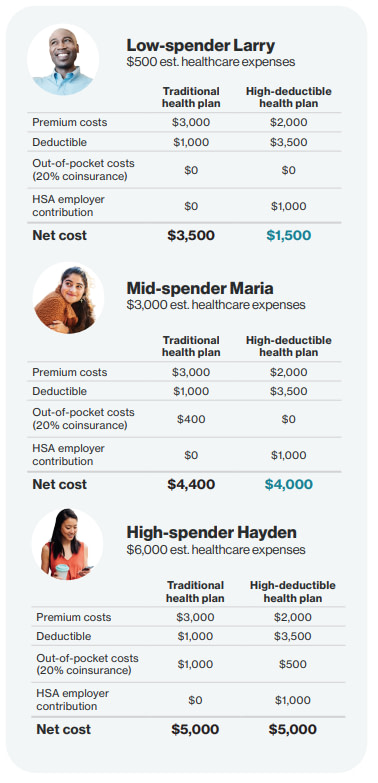
Visual Comparison – See the chart below
- Cost Differences: HDHPs typically have lower premiums but higher deductibles than traditional plans.
- Coverage Variations: Traditional plans offer more comprehensive coverage with predictable costs.
- Flexibility in Healthcare Spending: HSAs provide more control over healthcare expenses and potential tax benefits.
How HDHPs and HSA-Compatible Plans Offer Advantages for Plan Sponsors
HDHPs and HSA-compatible plans offer significant cost savings for plan sponsors due to their lower premiums. Additionally, employer contributions to HSAs are tax-deductible, providing further financial benefits. These plans also empower employees to take control of their healthcare spending, potentially leading to more informed and cost-effective healthcare decisions.
Insured employees benefit from HDHPs and HSA-compatible plans through lower monthly premiums, which can free up more of their paycheck. Additionally, contributions to HSAs are tax-deductible, and the funds can be used tax-free for qualified medical expenses, providing significant tax savings. These plans also offer greater control over healthcare spending, portability since HSAs stay with employees even if they change jobs, and the potential to invest HSA funds for future growth.
Let’s take a moment to check the math. You can calculate the net costs of health plan options by adding premium costs and out-of-pocket expenses and then subtracting any employer HSA contributions. This process helps employees understand their actual financial responsibilities under different plans. By comparing low, moderate, and high-spender scenarios, employees can make more informed decisions about which plan best suits their healthcare needs and budget.
- Low Spender: Minimal healthcare expenses, benefiting most from lower premiums.
- Moderate Spender: Regular healthcare needs, balancing premiums, and out-of-pocket costs.
- High Spender: Significant healthcare expenses, potentially benefiting from HSA contributions and tax savings.
Empowering employees as informed healthcare consumers involves providing education and resources to help them make knowledgeable decisions about their healthcare. By encouraging proactive healthcare management and promoting financial wellness with HSAs, employees can better navigate their healthcare options and optimize their spending. This approach leads to improved health outcomes and greater financial security.
Should You Choose an HDHP or HSA-Compatible Plan for Your Business?
Choosing an HDHP or HSA-compatible plan for your business offers flexibility when designing benefits packages that meet diverse employee needs. These plans align well with employee preferences and provide a competitive edge in attracting and retaining top talent. By understanding your workforce’s healthcare needs, you can select a plan that enhances employee satisfaction and supports your company’s overall goals.
These plans can significantly improve the bottom line for both employers and employees by reducing premium costs and offering tax advantages. Employers benefit from lower healthcare expenses and potential tax deductions, while employees enjoy lower premiums, tax-free savings, and greater control over their healthcare spending. This dual benefit can increase financial stability and satisfaction for all parties involved.
Schedule a Call
Learn more about VensureHR and how we can make an impact on your business.
Contact VensureHRFor more detailed information on how HDHPs and HSA-compatible plans can help your business, consider reaching out to your Vensure representative, or visit the marketplace to explore these options further and find the best fit for your company’s healthcare needs. These steps can help you make an informed decision that supports your employees and the bottom line.
In conclusion, navigating the maze of healthcare options can be challenging, but understanding High-Deductible Health Plans (HDHPs) and HSA-compatible plans provides a clear path toward a more cost-effective and flexible healthcare strategy for your business. This guide has aimed to demystify these plans, outlining their key features, benefits, and differences compared to traditional health insurance. Empowered with this knowledge, you can better manage healthcare costs while offering valuable and adaptable benefits, ultimately fostering a healthier, more satisfied workforce.