More than most industries, law firms often treat human resources administration like a clerical function. This approach in legal services has a lot to do with the “corporate” structure of law firms. Because they are partnerships, law firms don’t have the same sense of a division between “management” and “labor” that most businesses do.
This ignores the fact that only some of the partners have equity in the firm, and the majority of the attorneys are associates without a partner title. But that’s what they’re working towards. Law firms’ self-image comes from the fact that a relatively small percentage of the staff are considered strictly employees (again, compared to most kinds of businesses.)
Large law firms tend to have large administrative staff to handle their HR needs. Smaller firms usually have an office manager, maybe with some assistance, often supported by a range of third-party service providers to handle tasks like processing payroll and taxes, managing insurance, and administering benefits.
But the benefits package the firm offers can be critical for smaller firms to attract and retain the talent they need. This is where size really matters, and expertise counts for a lot. This is also why law firms should consider turning their HR administration over to a professional employer organization (PEO).
The Help Law Firm Office Managers Need
The Office Manager (or Office Administrator, or Director of Operations, or a dozen other titles) at a smaller law firm is likely to find themselves tasked with an array of responsibilities. In addition to HR, they probably oversee management of the non-legal staff, the office equipment and even the office itself. While they ultimately report to the Managing Partner of the firm, the office manager tends to have a lot of discretion in day-to-day decision-making and is considered a strategic contributor to the firm’s operations.
So it makes sense to minimize the number of different vendors the office manager has to manage. A PEO can address some of the most critical functions like benefits management (more on this below), insurance, employers’ regulatory compliance, and employee engagement.
The best PEOs utilize Human Capital Management (HCM) software to coordinate with client firms, increasing efficiency across the board and providing a superior user experience for the entire staff including the firm’s admin personnel. This enables virtually every aspect of personnel management – from hire to retire – from a single dashboard. With simplified control of so many functions, office managers have more time to focus on strategic initiatives.
The Benefits Firm Employees Expect
The single greatest advantage a PEO brings to a law firm of any size – but especially smaller ones – is the ability to more cost-effectively provide top tier benefits. Because PEOs pool all the employees they administer on behalf of clients – sometimes tens or even hundreds of thousands of employees – they enjoy the benefits of a larger risk pool to lower rates. And their economies of scale lower administrative overhead for each participant.
In addition to a range of attractive healthcare plans, PEOs can offer dental, vision, and pre-tax health savings or flexible savings accounts (HSAs and FSAs), life insurance, long term disability, and even identity theft protection. 401(k) plans are another common offering.
Programs like these put even the smallest firm on a comparable footing with much larger ones and eliminate a common motivation for talent to change jobs. In combination with the overall professionalism and responsiveness a PEO brings to a client relationship, the partners and staff can take pride in the firm they represent. The firm’s clients sense that confidence too.
The Services Law Professionals Want
The same professional culture that distinguishes law firms from most other kinds of businesses also applies to their personnel. Apart from the relatively slim administrative staff, most firms consist of sophisticated professionals – the attorneys, associates, paralegals, and legal assistants – all of whom are extremely capable and self-directed.
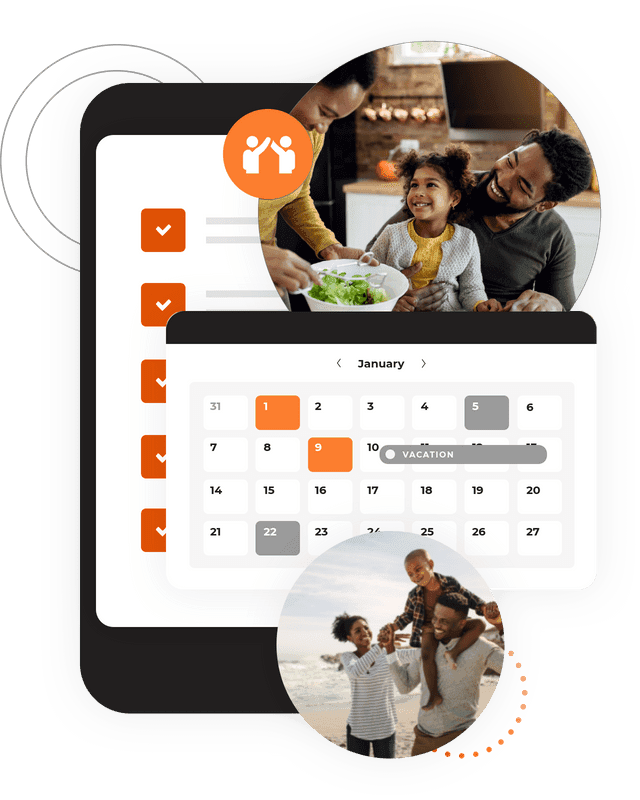
They greatly appreciate the self-service aspects of a PEO’s HCM software. This allows them to manage their taxes and benefits, request and track time-off, and handle any HR forms or other chores on their own schedule. The better HCM software platforms include mobile access that gives these professionals further latitude to work when and where it suits them best.
If and when law firm personnel need assistance with HR matters like benefits elections, a solid PEO has specialists on staff to answer questions and provide guidance. This extends the office manager’s resources on demand and delivers a level of expertise that knowledgeable employees appreciate.
How VensureHR Makes Small Law Firms Feel Big
As the largest privately-held PEO in the nation, VensureHR provides the scale and variety of benefits that law firms expect. And, because the focus of VensureHR’s business is small and mid-sized companies, they are an ideal partner for smaller law firms that expect individualized attention.
VensureHR’s customizable software is designed for intuitive use and includes a mobile app to support today’s professionals wherever they live and work. Engaging a PEO like VensureHR can elevate the employee experience while enjoying the increased efficiency that comes with it.
Find out how a PEO can help make your office manager’s job easier and retain your best people.
One Partner. Many People Solutions.
We provide a full suite of HR, payroll, and compliance technology and services to keep your business running smoothly.
Learn More