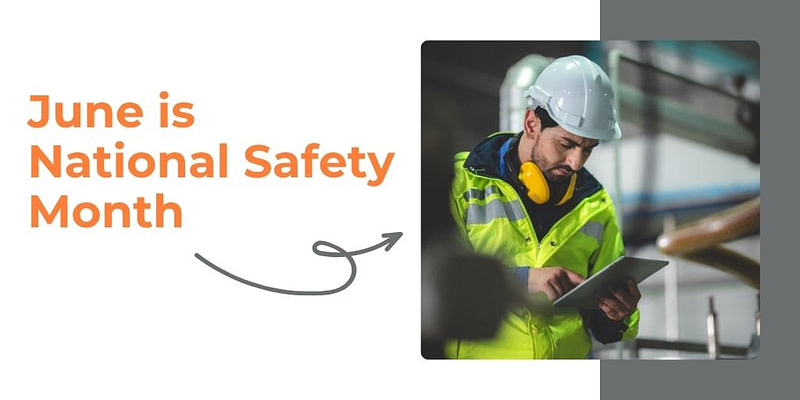
June is the National Safety Council’s National Safety Month — a dedicated time to reinforce the importance of workplace safety and wellbeing. At its core, this observance is about more than just compliance; it’s an opportunity to reflect, improve, and strengthen the systems that keep our teams safe.
Some occupations come with inherent dangers, working in difficult environments or using equipment capable of causing physical harm if not carefully and properly handled. Professionals in these jobs are reminded every moment of the hazards involved and tend to be diligent in taking the necessary precautions.
But the risks for most jobs and worksites are usually less obvious. This can lead to complacency in guarding against the risks that do exist. And professional dangers to some workers are nearly invisible, coming in the form of excessive stress or fatigue which can still result in lasting physical harm.
This year’s observance is focused on four key areas that play a critical role in shaping a strong safety culture for every business: continuous improvement, employee engagement, roadway safety, and overall wellbeing. Each week in June offers a chance to take meaningful action in these areas — whether by reviewing a process, supporting a colleague, or simply staying alert in high-risk environments.
Week 1: Embracing Continuous Improvement
Workplace safety is never “finished.” There is always room to adjust, evolve, and innovate. This week encourages teams to take a close look at existing safety practices. Are procedures being followed? Are there outdated methods that could be updated? Gathering input from employees and acting on feedback can lead to better outcomes and reduced risks over time.
It’s incumbent on company leadership – especially HR, if that function exists inside the organization – to stay current on evolving workplace threats and best practices for mitigating them. Industry associations can be a great source of such information, along with industry-specific information sources like newsletters and other publications.
Engaging a consultancy focused on risk mitigation and loss control can be a literal life-saver; business insurance providers may have recommended firms that provide this service. These providers stay current on emerging threats in the workplace and the most successful countermeasures.
Week 2: Encouraging Employee Engagement
A safe workplace is the result of a collaborative effort. Employee engagement is essential. When individuals feel empowered to speak up, ask questions, and share concerns, everyone benefits. Use this week to foster open communication. Toolbox talks, informal check-ins, and team meetings are all great opportunities to reinforce that every voice matters when it comes to safety.
Organizing and provisioning such programs is a chance for HR to make a significant and obvious contribution to the company’s success. These programs and events also boost team morale and demonstrate the company’s commitment to employee wellbeing. Never underestimate the power of shared experiences and a common purpose.
Week 3: Practicing Roadway Safety
According to the latest available data from the National Institute for Occupational Safety and Health (NIOSH), 35% of all work-related deaths resulted from motor vehicle accidents. This includes all driving for business, not just logistics or transportation.
Whether working in or near traffic zones, driving between sites, or sharing the road with the public, roadway safety is a shared responsibility. This week, reinforce the importance of visibility, awareness, and adherence to traffic control measures. Staying alert can mean the difference between a routine day and a serious incident.
Week 4: Supporting Employee Wellbeing
As more professions become sedentary occupations requiring little or no physical exertion, it’s easy to overlook the health considerations. Ailments like carpal tunnel syndrome or spinal compression will literally make themselves felt. But less obvious health issues can be even more insidious.
Wellbeing encompasses physical health, mental clarity, and emotional stability – all of which affect how we perform and interact at work. Health and safety go hand in hand. Mental stress – exacerbated by complex tasks, tight deadlines, and challenging work environments – can literally be a killer, even as the damage goes unrecognized.
Encourage rest periods, hydration, and access to support resources like wellness programs or Employee Assistance Programs (EAPs) for your people. Check in with colleagues to make sure they’re okay, and take a moment to prioritize your own health as well. Use this week to identify company-wide habits that engender an ongoing culture of care for health and safety.
Moving Forward Together
National Safety Month is not just about reminders; it’s about reinforcing our shared commitment to a workplace where everyone feels safe, valued, and supported. Guidelines like OSHA regulations are a great starting point. But they are just the start.
Let’s use this time to strengthen our practices and our connections, one conversation and one action at a time. This will increase the rewards of coming to work each day while it lowers the cost of insurance and the risk of lost income.
As one of the largest PEOs in the nation, VensureHR has whole departments dedicated to risk management and loss control. And because the focus of our business is small and mid-sized companies, we are geared to working with organizations with minimal in-house HR capabilities. Engaging a PEO like VensureHR can unburden your HR staff from administrative hassles and free them to engage with employees around more productive activities like team safety. To learn all that a PEO can do for you, schedule a no-cost business evaluation from VensureHR today.
Schedule a Call
Learn more about VensureHR and how we can make an impact on your business.
Contact VensureHR